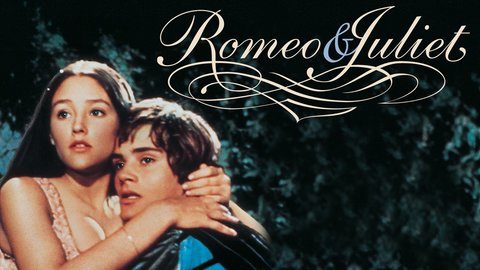
In scene 4.3 of Romeo and Juliet, Juliet contemplates the countless horrors that potentially await her in the tomb where she will be falsely laid to her death, coming to the conclusion that she is ready to face anything and risk everything to be with Romeo. This scene highlights Juliet’s undying love and reckless determination for her relationship. Contrary to the popular idea that Romeo and Juliet were destined for death by Fate, I believe they are very much in control of their own path and ultimately make their own decisions concerning their untimely deaths- as well as many others. Juliet appears to agree with this statement while Romeo, who consistently blames fate for his misfortunes, does not. It is true, though, that the “star-crossed lovers” (P6) have a very difficult situation in that their two families suffer from possibly centuries of loathing, and their relationship would not only be highly unapproved of, but also potentially deadly if brought to light. Despite possessing this unencouraging knowledge, they choose to proceed with their forbidden romance, welcoming any trouble that might bring on themselves and other people.
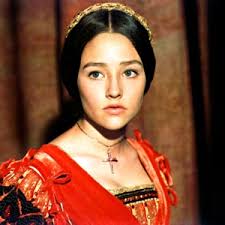
One of Juliet’s primary concerns with the plan to reunite her with Romeo is that she may “wake before the time that Romeo” (4.3.32) comes to retrieve her, leaving her “stifled in the vault” (4.3.34) with “no healthsome air” (4.3.35). Another “fearful point” (4.3.33) is that “bloody Tybalt, yet but green in earth, lies fest’ring in his shroud.” (4.3.43-44) During the time period that Shakespeare wrote Romeo and Juliet, it was a widely accepted and common belief that ghosts sometimes walked the earth after their death if they had someone they wanted to look over or some sort of unfinished business. Juliet wholeheartedly understands that she could wake before Romeo arrives, but she is willing to risk the stale suffocating darkness, “loathsome smells” (4.3.47), ghosts of her deceased relatives, and even the chance of losing her mind. Juliet also frets over the possibility that Friar Lawrence could be trying to poison her:
“What if it be a poison, which the friar
Subtly hath ministered to have me dead,
Lest in this marriage he should be dishonored
Because he married me before to Romeo?
I fear it is.” (4.3.25-29)
This particular passage sticks out to me because Juliet acknowledges the fact that Friar Lawrence could be trying to poison her with the mystery potion he has given to her, but she is so desperate to be with Romeo that she takes the chance anyway, convincing herself that the Friar is a holy man and therefore trustworthy. We know that Juliet was correct in her trust, but nonetheless it was a big leap of faith. She has proven in this scene that she will risk everything, even her own life, to be with Romeo. She makes this decision with good intentions, but it ultimately leads to Romeo’s death when he fails to notice she is not actually dead. You can feel that Juliet’s decisions throughout the novel come directly from her own strong will and determination, while Romeo appears to be pushed or go unwillingly into many of his situations.
It is a common theme throughout the play for the characters themselves to attempt to blame their misfortunes on Fate rather than accepting responsibility for their own actions. One example occurs after the deaths of Mercutio and Tybalt. After slaying Tybalt in retribution for Mercutio’s death, Romeo exclaims, “O, I am fortune’s fool!” (3.1.142). In saying this, Romeo is implying that it is Fate’s fault, and not his own, that Tybalt lay slain. Instead of accepting that he indeed is at fault for his murderous actions, he chooses to implicate Fate. Whether he truly believes this sentiment or just wishes to push some of the blame and guilt away from himself does not change the fact that he has just killed his new wife’s cousin- justified or not. And it is this very action that leads to his permanent exile form Verona- as well as Juliet. Another example of Romeo’s quarrel with Fate occurs after his encounter with Balthasar, where he learns of Juliet’s apparent death. He cries, “Is it e’en so?—Then I defy you, stars!—” (5.1.25). Romeo’s declaration directly to “the stars” is his way of saying that Fate cannot (and will not) stop him from spending eternity with his Juliet, even if it means killing himself to do so. This moment is crucial to Romeo’s character development because he finally decides to take his life into his own hands. While he still believes Fate is the root of all consequences, his final decision acknowledges his free will. In drinking the poison, he takes control of his destiny, sealing his own fate as well as Juliet’s, as she is unwilling to live without him. Despite this brief moment of freedom, Romeo routinely chooses to believe it is Fate that has brought misfortune after misfortune on his and Juliet’s secret love instead of accepting the painful truth- that you cannot blame Fate for your misfortune. It is your choices that define your path.
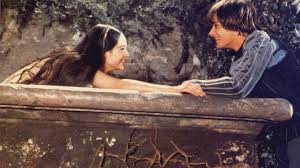
Scene 2.2 is another scene that accurately highlights Romeo and Juliet’s ability to make their own decisions. The balcony scene is of upmost importance because, in this moment, they both decide to defy every rule that their families have ever given them in order to be together. Juliet says to Romeo:
“Deny thy father and refuse thy name.
Or, if thou wilt not, be but sworn my love,
And I’ll no longer be a Capulet.” (2.2.37-39)
It has been made abundantly clear that any association between the Montagues and Capulets is strictly forbidden, so for Juliet to ask such a thing of Romeo is quite shocking, but Romeo, having previously declared that “Juliet is the sun” (2.2.3), has no issue with this demand and wholeheartedly agrees to defy the outdated and unjustifiable hatred between the two families. The decision to continue their love affair leads to many tragedies within Verona, but it ultimately was their own decision. They may have been destined to meet under the most difficult of circumstances, but where they go from there is entirely of their own doing. Any of the multiple deaths that occur following the beginning of their relationship could have been prevented had there been better decision making.
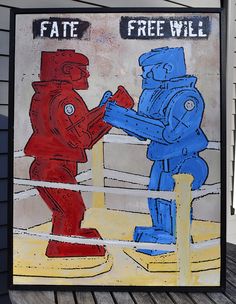
Every single horrible incident that occurs in Romeo and Juliet could have been prevented had someone chosen to follow a different path or make a different decision. The Capulets and Montagues are filled with an unjustifiable, unreasonable, and senseless hatred for one another. A hatred that literally put an end to the Capulet and Montague bloodlines since Romeo was the only son of Montague and Juliet the only daughter of Capulet. A hatred that burned everything to the ground. But they do not get to blame their shortcomings on Fate, even Romeo acknowledged that in the end. The families chose to continue to hate one another generation after generation. Romeo and Juliet chose to get married, even though they knew they could never publicly be together. Romeo chose to the avenge Mercutio’s death, accepting whatever punishment the prince deemed fit. Juliet chose to drink the potion form Friar Lawrence despite the fact that it could have been poison. And Romeo and Juliet ultimately chose to take their own lives rather than live without each other.
https://prezi.com/g5voa-cunf-y/fate-vs-free-will-which-governed-romeo-and-juliets-story/
 Romeo and Juliet?